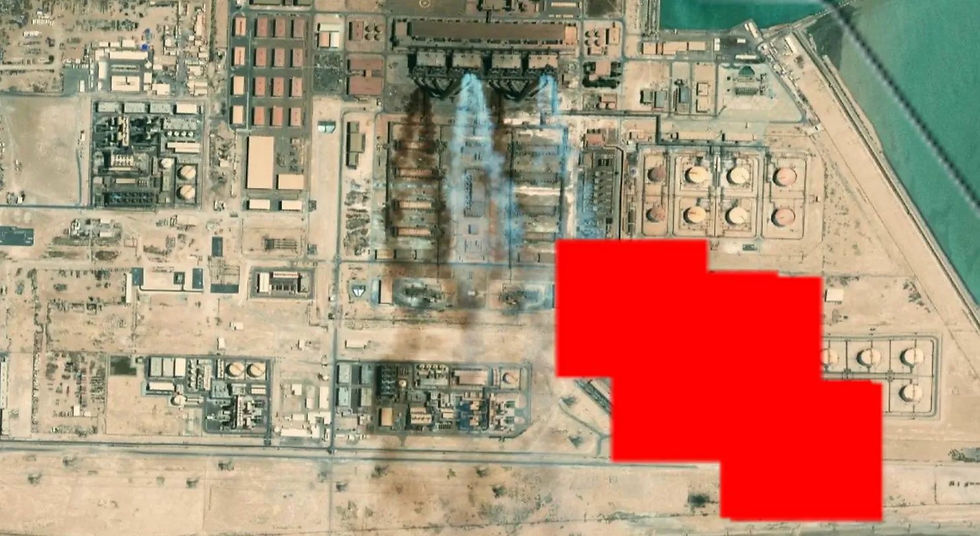
UPDATED 9:58 PM EDT - DESALINATION PLANT HIT IN KUWAIT
- Mar 29
- 2 min read
Source: Hal Turner

At 8:56 PM EDT reports are storming-in from Kuwait saying Iranian Missiles have struck a Desalination Plant in Kuwait. The plant provides 38% of Kuwait's water supply.
Desalination is the process of removing salt and minerals from seawater or brackish water to produce fresh water for drinking, irrigation, and industrial use. It is a crucial, growing solution to global water scarcity, with over 16,800 plants operating worldwide producing nearly 97 million m/day.
How It Works
Reverse Osmosis (RO): The most common modern method, using high-pressure pumps to force seawater through semi-permeable membranes that trap salt, filtering out 99% of contaminants.
Thermal Distillation: Heating water to create steam, which is then condensed into pure water, mimicking the natural water cycle.
Key Benefits
Independent Water Source: It provides a reliable supply of fresh water not dependent on rainfall.
Versatility: Used in arid regions for drinking, agriculture, and industry.
Potential Drawbacks & Challenges
High Energy Consumption: The process is energy-intensive, which can contribute to greenhouse gas emissions.
High Cost: Seawater desalination is generally more expensive than treating conventional water sources, although costs are falling as technology improves.
Environmental Impact: Plants produce highly saline brine wastewater that is returned to the ocean.
As of 2020, total global capacity is roughly 97 million m/day, mostly concentrated in regions like the Middle East, with projects expanding rapidly to meet water demand.
Kuwait operates seven to eight major desalination plants along its coast, which serve as the primary source of freshwater, providing over 90% of the country's water for domestic and industrial needs. Key plants include Doha West, Doha East, Al-Zour South, and Shuaiba, with a total daily production capacity exceeding 2.2 million cubic meters.
POPULATION
As of early 2026, Kuwait's population is estimated to be over 5 million, with foreign nationals comprising approximately 65-70% of the total, making them a significant majority, according to Worldometer and Kuwait Times. The population is largely urbanized, concentrated in the capital, Kuwait City, and features a high percentage of expatriates from over 100 countries, notably India and Egypt.
If the Desalination system(s) are taken offline, all five million people will have to evacuate the country within three days to survive.
Iran explicitly warned they would attack Desalination Plants if the US and/or Israel attacked it's power grid. Such an attack took place TODAY. Iran has now begun its retaliation.
UPDATE 9:23 PM EDT --
CONFIRMED! Iran strikes Kuwait Desalination plant causing massive damage. One worker killed.

UPDATE 9:58 PM EDT --
NASA FIRMS satellite data detects an active fire today at the Doha West Power and Water Desalination Station in Kuwait.

Doha West Power and Water Desalination Station — Kuwait’s largest combined facility, producing 2,400 MW of power and 110 million gallons of fresh water per day.